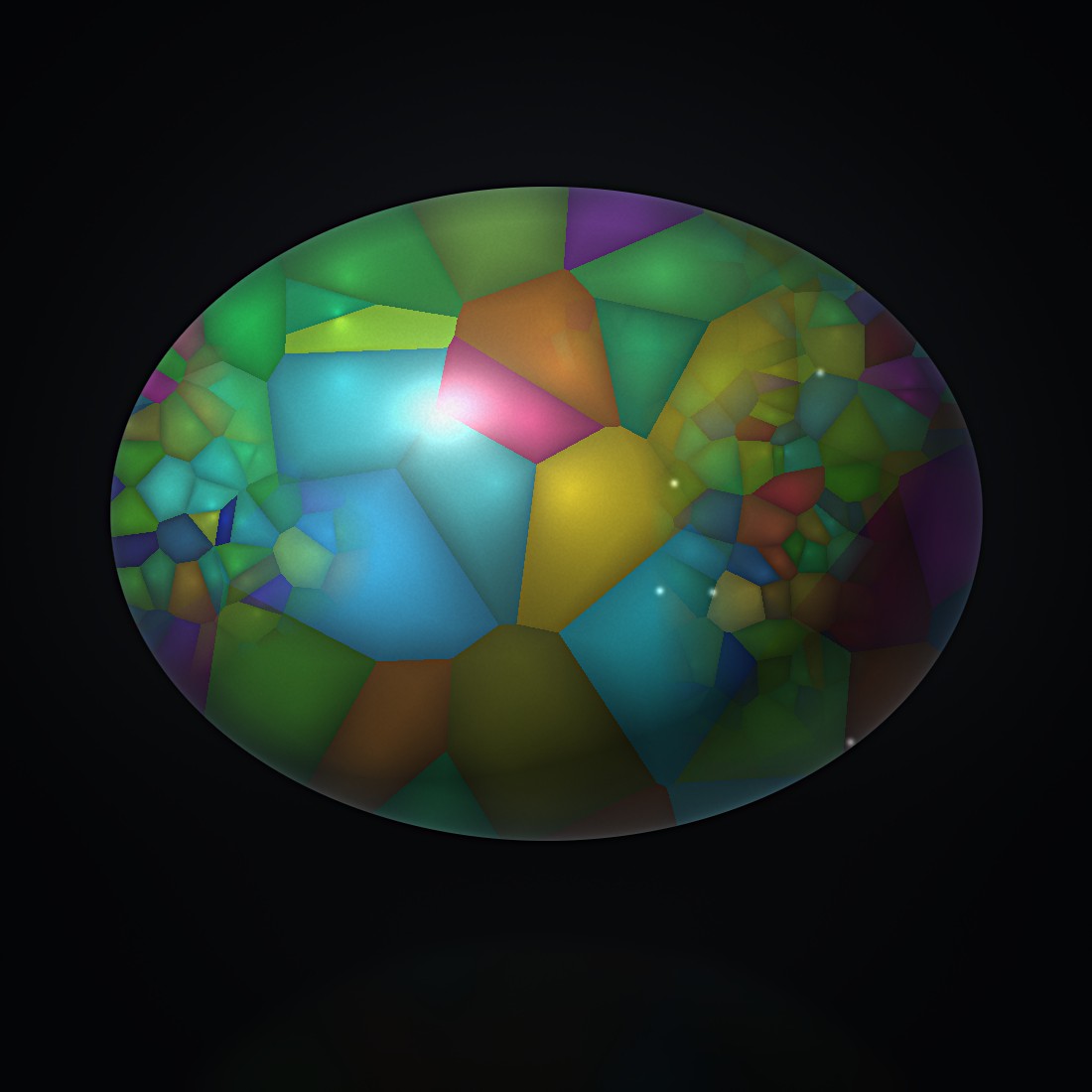
If you're new to Ethiopian opal, this guide covers everything you need before buying: what makes it special, the varieties you'll see, how it stacks up against Australian opal, what it's worth, and a checklist for buying with confidence. Each section links to a deeper guide where there's more to say.
What is Ethiopian opal?
Ethiopian opal is a form of precious opal — opal that shows play-of-color, the shifting flashes of spectral color that separate a gem opal from a plain "common" one. What sets most Ethiopian material apart is that it is hydrophane: porous enough to absorb water, which temporarily changes how it looks and demands specific care. The color can be extraordinarily bright, often set against a clear or milky-white body that lets light bounce around inside the stone.
Where Ethiopian opal is mined
Two areas matter. The famous one is the Welo (Wollo) Province in the northern highlands, where a large deposit was discovered near Wegel Tena in 2008. Welo opal is bright, mostly hydrophane, and makes up the great majority of what's sold today. The older source is the Mezezo area of Shewa, found in the mid-1990s, which produced darker, brown-bodied stones that were more prone to cracking. Welo largely replaced it on the market. For how the stones reach buyers and the conditions behind them, see ethical sourcing.
The main varieties
Most of the names you'll encounter describe body color or treatment rather than different minerals:
- Crystal / white Welo — transparent to milky, bright play-of-color; the classic Ethiopian look.
- Fire opal — warm orange-to-red body color; the term causes real confusion, which that guide untangles.
- Black opal — dark-bodied stones; most Ethiopian "black" opal is smoke- or sugar-treated, not naturally dark.
- Chocolate opal — brown-bodied, natural or treated.
Ethiopian vs Australian opal
The short version: Australian opal is stable and doesn't absorb water; Ethiopian opal is usually hydrophane, brighter for the money, and needs gentler handling. Australian black opal still sits at the top of the value pyramid, while Ethiopian offers the most fire per dollar. The full trade-off — durability, price, ethics, and which suits a ring — is in Ethiopian vs Australian opal.
How much is Ethiopian opal worth?
Value is driven by the brightness and pattern of the play-of-color, the body tone, transparency, size, and cut — and heavily by whether the stone is natural or treated. Commercial stones cost a few dollars a carat; fine gem material with vivid, broad color runs much higher. See Ethiopian opal price & value for realistic ranges and what moves them.
Caring for Ethiopian opal
Because it's hydrophane, Ethiopian opal can turn cloudy or amber when it absorbs water, then clear again as it dries. Brief contact with clean water is fine; soaking, heat, and contaminated water are the enemies. The complete rules — cleaning, drying, storage, and what to do if a stone clouds — are in the care and hydrophane guide.
How to tell if an Ethiopian opal is real
The market includes lab-grown (synthetic) opal, glass and resin imitations, doublets and triplets, and undisclosed treatments. A loupe, a look at the stone's side profile, and a healthy skepticism about bargain prices catch most problems. Our guide to real vs fake Ethiopian opal walks through the tests.
A buying checklist
- Ask directly whether the stone is natural or treated, and get the answer in writing.
- Look for bright, broad play-of-color that holds up as the stone is tilted — not a single flash from one angle.
- Check the body: clarity and even color usually beat cloudiness and cracks.
- Inspect the side profile for the flat seam of a doublet or triplet.
- For anything expensive, ask about independent certification.
- Buy from a seller who explains care and stands behind disclosure.
Frequently asked questions
What is an Ethiopian opal?
Ethiopian opal is a precious opal — an opal that shows play-of-color — mined mainly in Ethiopia's Welo Province. Most of it is hydrophane, meaning it absorbs water and can cloud temporarily, and it's known for bright color at a lower price than Australian opal.
Is Ethiopian opal real opal?
Yes. Natural Ethiopian opal is genuine precious opal, chemically the same family as Australian opal. The difference is structural: most Ethiopian material is hydrophane and porous, while Australian opal is not.
Is Ethiopian opal rare or valuable?
It is not rare in the way top Australian black opal is — supply has been relatively plentiful since 2008, which keeps prices lower. Fine gem-grade stones with vivid, broad play-of-color are still genuinely valuable; commercial stones are inexpensive.
Is Ethiopian opal good for a ring?
It can be, with care. Because it's soft (about 5.5–6.5 on the Mohs scale) and hydrophane, an everyday ring is safest in a protective setting, or you may prefer earrings or a pendant. A disclosed stabilized stone is more forgiving for daily wear.
Where does Ethiopian opal come from?
Chiefly the Welo (Wollo) Province in Ethiopia's northern highlands, from a deposit found near Wegel Tena in 2008. An older source in the Mezezo area of Shewa produced darker, more fragile stones.